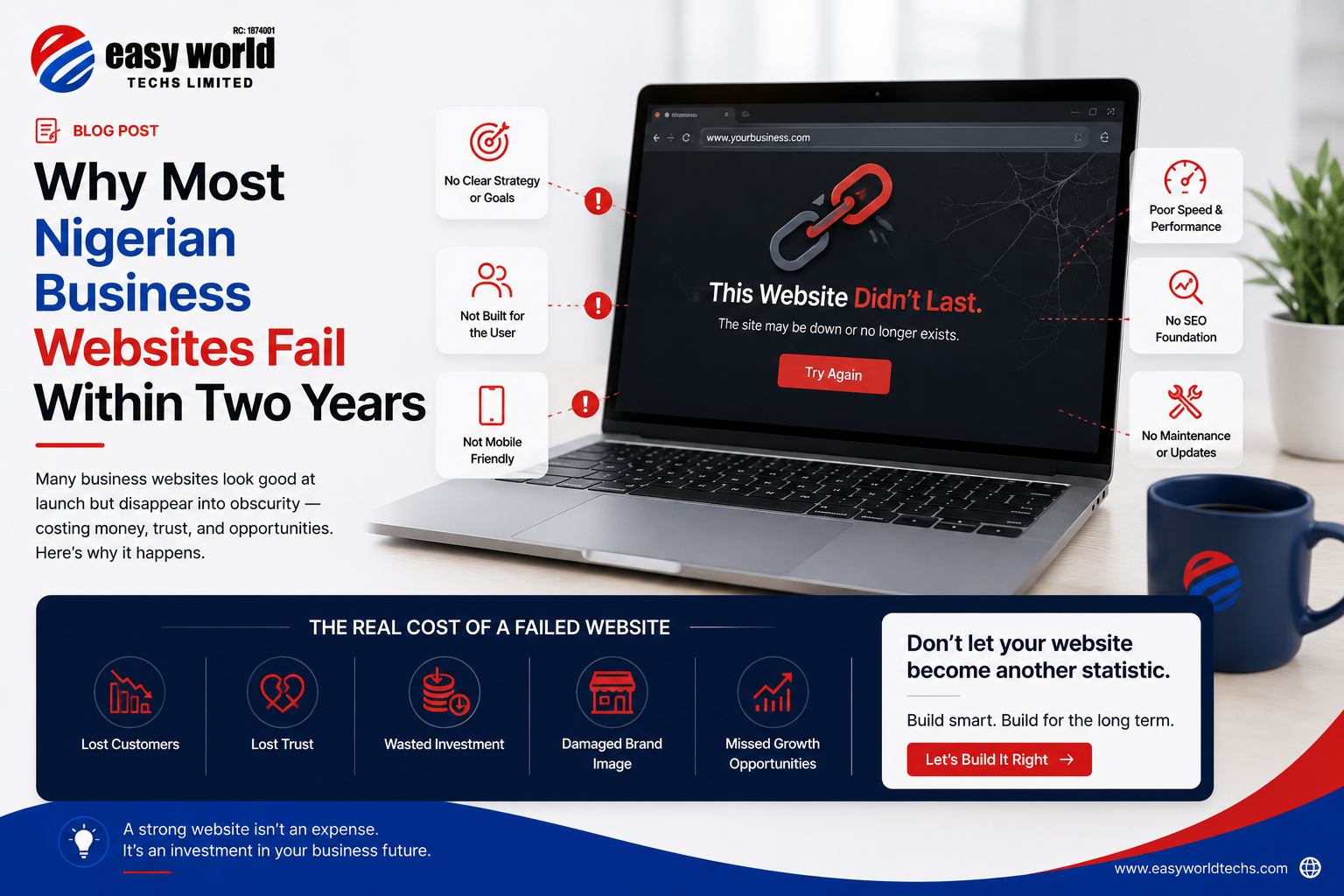
Most people assume a website fails because it looked bad, or because the business behind it failed. Neither of those is usually the reason. We've watched enough of these die to say this with some confidence: the website itself is rarely the problem. What kills it is almost always decided in the first conversation, before a single line of code gets written — and it has nothing to do with design.
Let's define "fail" first, because it's not always dramatic. Sometimes it's a site that quietly stops getting updated, then stops getting visited, then gets forgotten until someone notices the SSL certificate expired eighteen months ago. Sometimes it's more visible — a business that paid for a full rebuild because "the old site wasn't working," when the old site was structurally fine and the actual issue was somewhere else entirely. Both count. Both are common. And both trace back to the same handful of decisions, made early, that nobody thought were decisions at the time.
The Common Belief: It Failed Because It Was Built Cheap
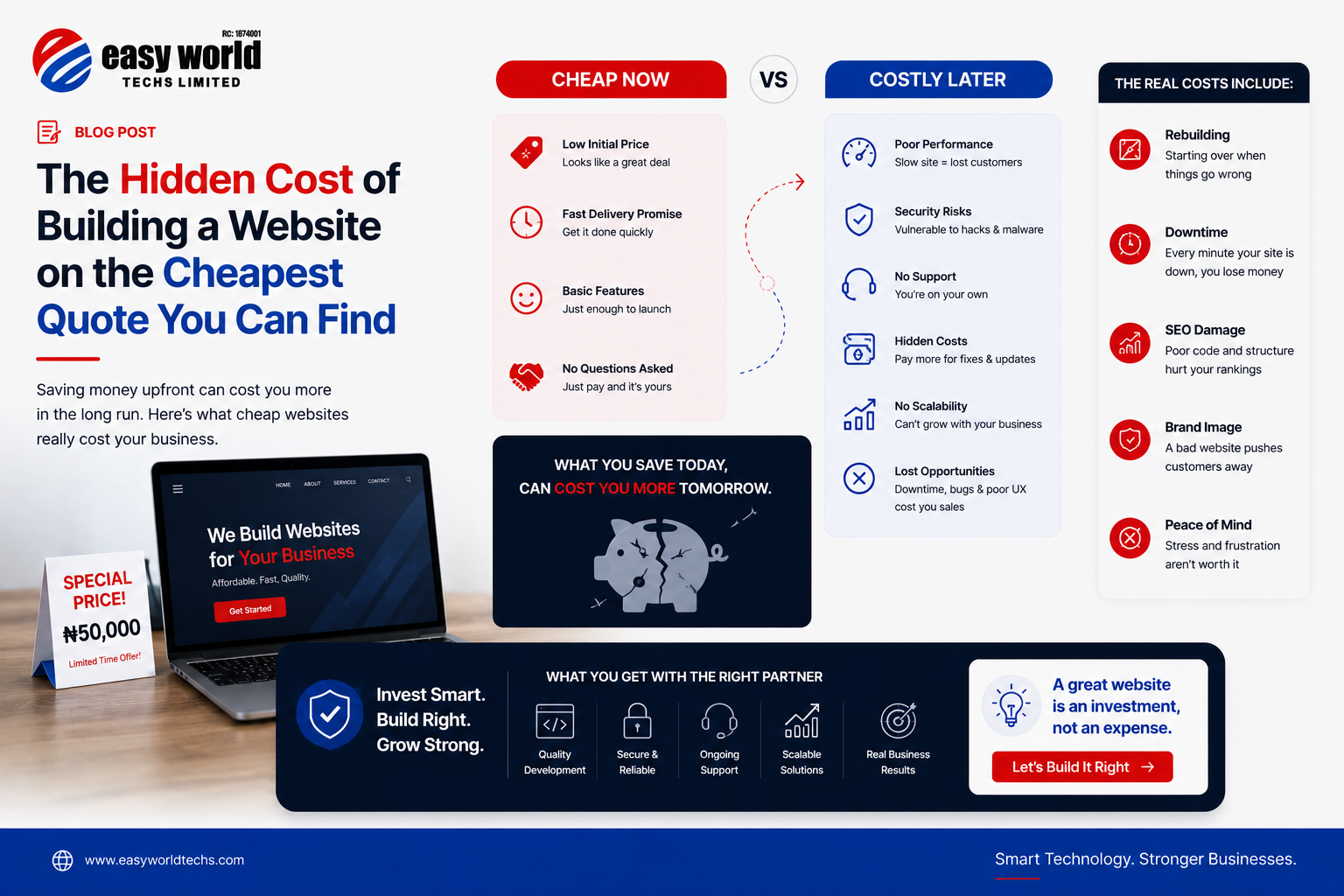
This is the explanation most business owners land on, and it's understandable — we wrote before about the hidden cost of choosing the cheapest developer quote, and that's a real problem. But it's not the whole story, and treating it as the whole story leads people to the wrong fix. They spend more the second time around, hire a "better" developer, get a nicer-looking site — and watch it decline the same way, on the same timeline, for reasons that had nothing to do with build quality.
We've seen well-built websites die and poorly-built ones limp along for years. The variable that actually predicts what happens isn't the code. It's what happened to the relationship between the business and the website after launch day.
What's Actually True: Nobody Planned for Life After Launch
Here's the pattern, and it's remarkably consistent. A business commissions a website. There's a discovery call, some design back-and-forth, a build phase, a launch. Everyone's excited on launch day. And then — nothing. No plan for who updates the content. No budget set aside for hosting renewal, domain renewal, or the inevitable point where a plugin breaks or a browser update changes how something renders. No one assigned to check whether the contact form is still actually sending emails to someone who checks them.
This isn't negligence, to be fair to the business owners we've worked with. It's that launch was framed — by the developer, by the business, by the whole conversation leading up to it — as the finish line. Nobody talked about what came after because "after" wasn't part of the sales conversation. The developer got paid for the build. The business got a website. Both parties considered the project complete. And a website, unlike almost everything else a business buys, doesn't stay finished. It needs someone paying attention to it indefinitely, and if that person doesn't exist, the site starts decaying from day one — you just can't see it yet.
The failure isn't sudden. It's slow enough that by the time it's visible — search rankings dropping, an expired certificate throwing security warnings, content that still references a 2023 promotion — nobody remembers exactly when it started, and nobody's sure whose job it was to catch it.
The Second Layer: Nobody Owns the Website Internally
This compounds the first problem. In a lot of Nigerian SMEs we've worked with, the website is treated as something that was "done" by an external party, rather than something the business owns and operates. There's no internal person whose job includes "the website." Maybe someone has the login. Maybe not even that — sometimes the only person with WordPress admin access is the developer who built it, and if that relationship ends badly, or the developer moves on, the business is locked out of its own site.
We're going to say something plainly here because it matters: if you don't personally know your website's login credentials, who owns the domain registration, and who has access to make changes, you don't actually own your website. You're renting access to it from whoever built it, whether or not any money is currently changing hands for that arrangement. This is one of the more common things we walk into when a new client calls us to "fix" a website — the actual first task is recovering access to something they should have had all along.
What This Means for How You Should Actually Think About a Website Project
If the real cause of failure is what happens after launch, then the fix isn't a better design brief or a pricier developer — though those help. The fix is treating the post-launch period as part of the project from the beginning, not an afterthought you'll figure out later.
Concretely, that means a few things. Before you commission a website, know who inside your business — even if it's just you — will be responsible for it once it's live: checking the form works, updating content when something changes, noticing when something looks broken. Make sure you, not just your developer, control the domain registration and hosting account, even if the developer manages it day to day on your behalf. Budget for renewal costs and occasional maintenance the same way you'd budget for any other recurring business expense, instead of treating it as a one-time cost that ends at launch. And ask, before the project starts, what happens if the relationship with the developer ends — do you get full access and documentation, or does the site effectively belong to them?
None of this is complicated. It's also, in our experience, almost never discussed until something's already gone wrong. A website is not a purchase. It's closer to a hire — something that needs ongoing attention to keep doing its job — and businesses that treat it that way are the ones whose sites are still working two, three, five years later. The ones that don't are the ones calling us in eighteen months, convinced the problem was the build, when the problem was that nobody was watching after the build was done.