We've sat across the table from a founder who'd been "almost ready to launch" for fourteen months. Fourteen months of adding one more feature, fixing one more edge case, waiting for the design to feel finished. In that time, two competitors with objectively worse products had launched, gotten customers, gotten feedback, and were already on their second iteration. Our founder was still polishing a product nobody outside his team had ever touched. When we finally asked him directly what he was actually waiting for, he didn't have a clean answer. He just knew it didn't feel ready yet.
That feeling — "not ready yet" — is the most expensive emotion in early-stage tech, and almost nobody names it honestly. It gets dressed up as diligence, as quality standards, as not wanting to embarrass yourself with something unfinished. Underneath, in our experience, it's usually fear wearing a professional outfit. Fear that people won't like it. Fear that launching reveals the gap between the idea in your head and the thing you actually built. An unlaunched product can still be perfect in theory. A launched one gets judged, and judgment is uncomfortable, so it's easy to keep finding reasons to delay the moment it happens.
Here's what that fourteen months actually cost, and it's worth being specific because "you're wasting time" is too vague to change anyone's behavior. It cost fourteen months of not knowing whether the core assumption behind the product was even correct — whether people actually wanted this thing enough to pay for it, use it repeatedly, tell someone else about it. Every feature added during those fourteen months was built on a guess, because there was no real user feedback to build on instead. Some of those features turned out to matter. Plenty didn't, and got built anyway, because building felt more productive than the alternative, which was admitting the product wasn't finished being figured out.
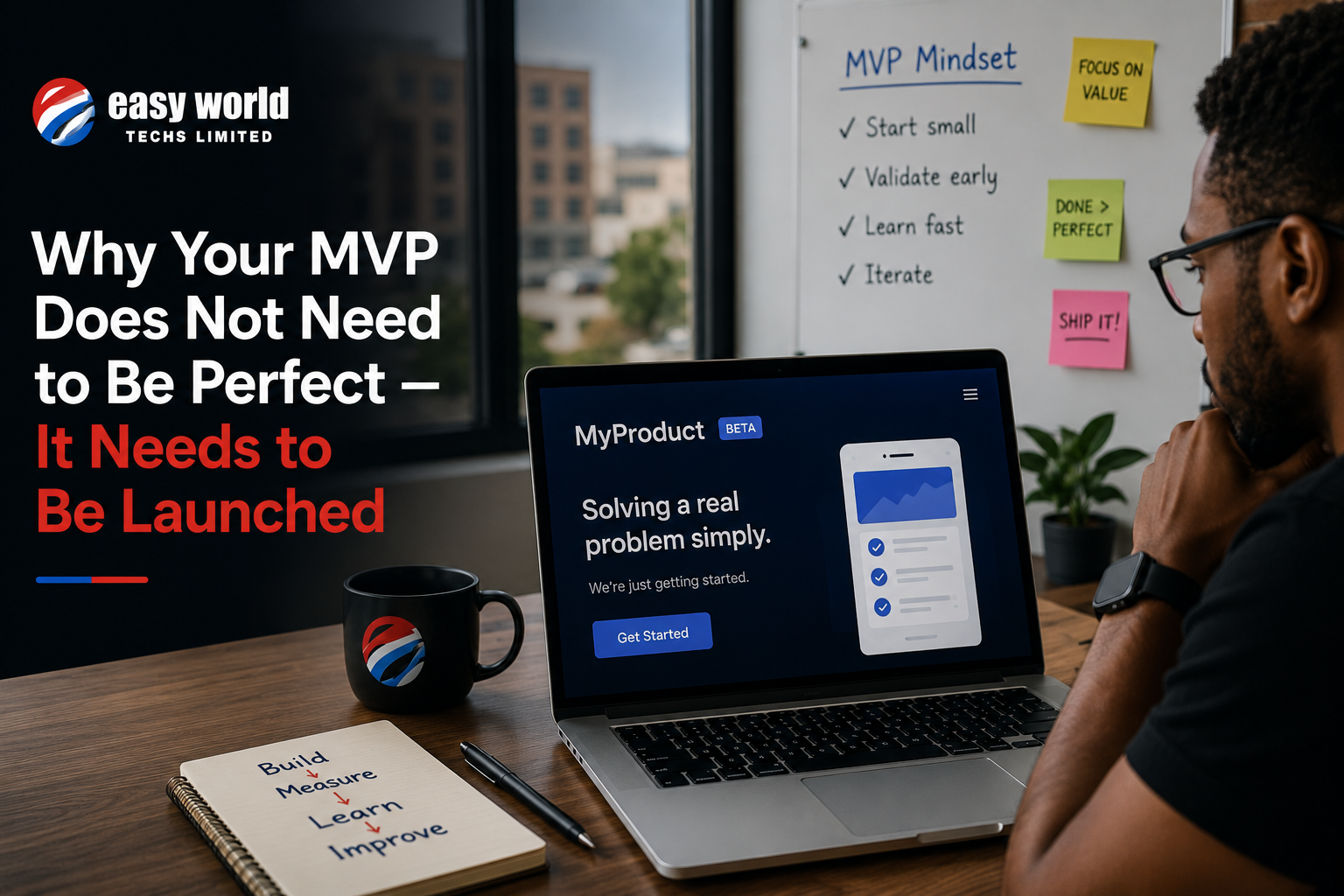
An MVP — minimum viable product, for anyone who's heard the term thrown around without a clear definition — is not a smaller, worse version of your final product. That's the misunderstanding that causes most of this delay. People treat "minimum" as an insult, something to be ashamed of, and try to sneak more into the "minimum" until it quietly becomes the full product again, at which point they're back to a fourteen-month build cycle with a different name attached to it. The actual purpose of an MVP is narrower and more useful than that: it exists to test whether your core assumption is true, as fast as possible, with as little wasted effort as possible. Everything that doesn't serve that one test is not minimum. It's scope creep wearing the MVP label to feel less guilty about itself.
What does that actually look like in practice? Take a booking platform for service businesses — something we've built versions of more than once. The core assumption might be: "service businesses will pay for a simpler way to manage bookings than WhatsApp and a paper diary." Testing that assumption doesn't require a polished mobile app with push notifications, a custom-branded client portal, and an integrated payment gateway. It requires a working booking form, a way for the business owner to see and manage those bookings, and a way to get paid. That's it. Everything else — the polish, the branding, the nice-to-haves — is deferred until you've confirmed the core assumption holds. If it doesn't hold, you've saved yourself from building six months of features nobody wanted around a premise that was wrong to begin with.
This is where founders get uncomfortable, and we understand why. Launching something unfinished feels like putting a bad first impression in front of the world permanently. It isn't. Nobody remembers version one of a product that succeeded. They remember what it became. The businesses everyone points to as design and product excellence — and we're deliberately not naming specific well-known products here, because the point isn't the brand, it's the pattern — almost universally started rougher than their founders were comfortable with at the time. What made the difference wasn't launching a perfect version one. It was launching a real version one fast enough to start learning, and then having the discipline to keep iterating based on what they learned instead of what they assumed.
There's a Nigerian-specific version of this hesitation worth naming directly, because we hear it a lot: the fear that launching something rough will damage a reputation you haven't built yet, in a market where word of mouth moves fast and trust is hard to rebuild once lost. That's a real concern, and we're not going to wave it away. But the answer isn't "wait until it's flawless." It's "be honest about what stage this is." A beta label, a waitlist, a direct conversation with early users that says plainly "this is early, here's what we're testing, tell us what breaks" — that framing gives you permission to be imperfect without damaging trust, because you set the expectation instead of letting the product's rough edges set it for you. What actually damages trust isn't launching something unfinished. It's pretending something unfinished is finished, and getting caught.
If you're currently sitting on something that's been "almost ready" for months, the question worth asking yourself honestly isn't "is it good enough yet." It's "what specifically am I still learning by not launching this." If the honest answer is "nothing — I already know what I don't know, and building more won't tell me anything new," then the thing left to do isn't build. It's launch, watch what actually happens, and let real usage tell you what fourteen more months of guessing never could.